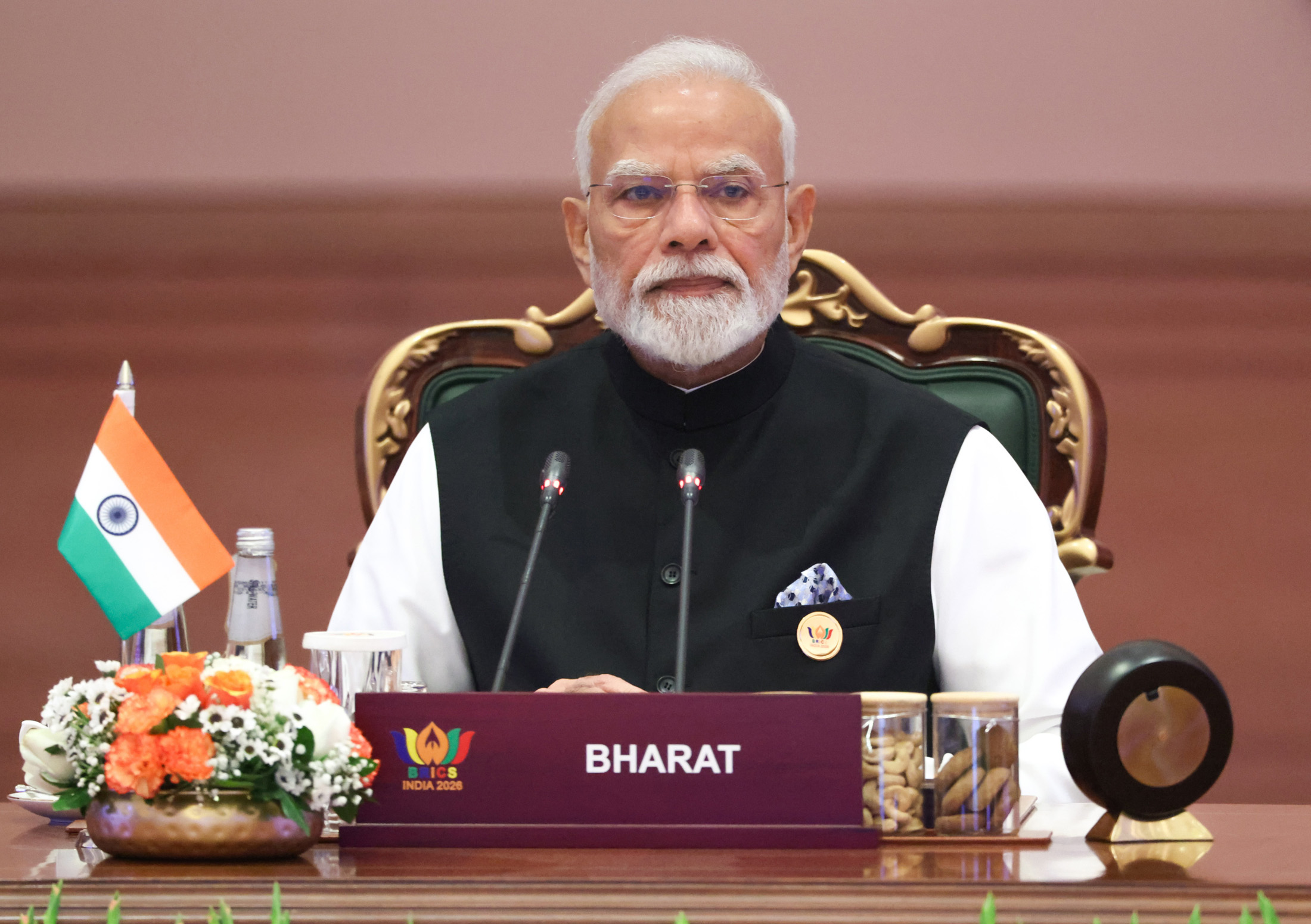
The BRICS summit in India delivered today the final declaration approved by all core members of the bloc. The declaration builds on some of the key tracks of BRICS development from the past several years, while also launching new initiatives prioritized by India during its chairmanship. On some of the issues such as the BRICS payment systems and the operationalization of the BRICS CRA arrangement the declaration keeps open the pathways for further progress; at the micro-level of supporting new business development and SMEs, the bloc approved the further exploration of initiatives such as the Invoice Discounting Mechanism. Overall, as expected the thrust of the new initiatives during this year’s summit tended to focus on supporting BRICS business cooperation at the micro-level of companies and priority sectors. Aside from the adoption of the Final declaration, one of the most important developments in the summit had to do with the initiative launched by Prime Minister Narendra Modi to create the BRICS Continuity and Implementation Mechanism that would be predicated on the operation of a BRICS Troika arrangement.
In the beginning of the declaration (para 3), BRICS leaders acknowledge the importance of the partnership belt members, with a commitment “to fostering inclusive, mutually beneficial and development-oriented partnership… [as well as their] increasing participation in BRICS engagements and practical cooperation in areas of shared interest”. Para 4 of the Declaration underscores the importance of the Outreach/BRICS Plus Dialogue segment of the 18th BRICS Summit, “which injects new impetus to strengthen international cooperation and solidarity”.
With respect to the WTO (para 20), the final summit statement calls for the re-launching of the full-fledged operation of the organization’s dispute settlement body, while reaffirming “unwavering support for reform of the World Trade Organization (WTO) and to strengthening a non-discriminatory, open, equitable, transparent, fair, inclusive, predictable and rules-based multilateral trading system, with the WTO at its core…” The statement expresses strong support for the WTO accession of Ethiopia and Iran, while also acknowledging China’s important contribution to supporting the economies of the Global South via the expanding of its zero-tariff treatment to cover 53 African countries with which it has diplomatic ties.
With respect to the discussions on the creation of a BRICS payment system (para 90), the Declaration acknowledges “the efforts of the BRICS Payment Task Force (BPTF) towards exploring pragmatic solutions for efficient cross-border payment mechanisms, drawing on the guidance, provided by us in the Kazan and Rio Declarations, on the BRICS Cross-Border Payments Initiative”. It also calls for the BPTF “to continue discussions, building on the ongoing work, to facilitate practical solutions for cross-border payments among BRICS countries, which are fast, low-cost, more accessible, efficient, transparent, and safe”. In effect, the statement leaves open scope for further progress in building consensus as well as exploring the technical possibilities of CBDC inter-operability across BRICS members.
With respect to the operationalization of the BRICS Contingent Reserve Arrangement (CRA) (para 97), the statement notes: “We look forward to timely completion of the ninth CRA Test Run, and release of the seventh edition of the BRICS Economic Bulletin on the theme “Global Economic Uncertainties and Implications for BRICS”. We value the participation of new BRICS members who have expressed interest in joining the CRA and we look forward to timely completion of discussions on onboarding them on a voluntary basis and according to country specific circumstances”. Again, as with CBDC inter-operability more time is needed to build sufficient support for the BRICS CRA reform to be expedited – this process if it does move ahead decisively could provide an important impulse to the expansion in the use of national currencies and greater South-South economic cooperation.
In paragraph 138 towards the end of the Summit Declaration, BRICS members underscored “the need for outcome oriented enhanced coordination, continuity and support for a long-term institutional development”. In this respect, the statement welcomed the progress on the establishment of BRICS Online Archival Database and called for its early operationalization for the benefit of the bloc’s institutional development.
The BRICS 2026 Summit Final Declaration can be accessed via the following link: https://www.pmindia.gov.in/en/news_updates/brics-new-delhi-declaration-building-for-resilience-innovation-cooperation-and-sustainability-september-12-2026/?comment=disable
Aside from the adoption of the summit declaration, India’s Prime Minister Narendra Modi in his Opening Remarks during the 18th BRICS Summit Session unveiled his key proposal on the BRICS Continuity and Implementation Mechanism. This proposal involves the launching of a BRICS Troika mechanism that brings together the past year’s, current year’s and next year’s chair in the bloc to ensure greater continuity in BRICS initiatives and a more rigorous monitoring framework of implementation of BRICS undertakings. India’s Prime Minister further reinforced this initiative with the proposal to create a secure digital repository that would keep track and record all of the key policy measures pursued by the bloc.
The direct quote from the official website of India’s Prime Minister on his Opening Remarks during the 18th BRICS Summit Session “Inclusive Global Governance and Strengthening”: “It is now time for us to translate our unity and consensus within BRICS into concrete outcomes on the global stage. For the next twenty years, we must work on a new and ambitious agenda. We must begin by strengthening our own working systems. The BRICS Chairship changes every year, but this should not interrupt our institutional momentum. I propose the establishment of a BRICS Continuity and Implementation Mechanism. Through the Troika, this mechanism will ensure systematic follow-up on all initiatives and outcomes. We can create a secure digital repository in which, for every decision, the nodal point, timeline, and implementation status can be recorded”[1].
This proposal to create the BRICS Continuity and Implementation Mechanism is perhaps one of the most significant for BRICS operational development in the past several years, with the expansion in membership in 2023-2025 as well as the absence of a BRICS institutional framework (Secretariat, headquarters) all pointing to the need for a policy continuity arrangement in the form of a Troika. This is the approach that has been actively pursued in recent years by a rising number of international platforms, organizations and regional blocs – from ASEAN to the G20 and the African Union[2]. If this proposal is adopted, it will contribute significantly to greater continuity in the succession of BRICS presidencies and will expand the scope for BRICS to forge greater intra-bloc cohesion and build new alliances across the global economy.
The text of Prime Minister Modi’s Opening Remarks during the 18th BRICS Summit Session can be accessed via the following link:
[1] https://www.pmindia.gov.in/en/news_updates/pms-opening-remarks-during-the-18th-brics-summit-session-inclusive-global-governance-and-strengthening/?comment=disable
[2] https://brics-plus-analytics.org/the-brics-troika-proposal-revisited/; https://brics-plus-analytics.org/a-brics-troika-format-for-chairmanship-transition/
Yaroslav Lissovolik, Founder, BRICS+ Analytics

Image via the Official website of the Government of India: https://www.pmindia.gov.in/wp-content/uploads/2026/09/H20260912216315.jpg